http://seekingalpha.com/article/3936476-tesla-gigafactory-challenge
Tesla: A Gigafactory Challenge
Feb. 26, 2016  Frank Greenhalgh
[images
https://staticseekingalpha.a.ssl.fastly.net/uploads/2016/2/3860661_14564468182045_0.jpg
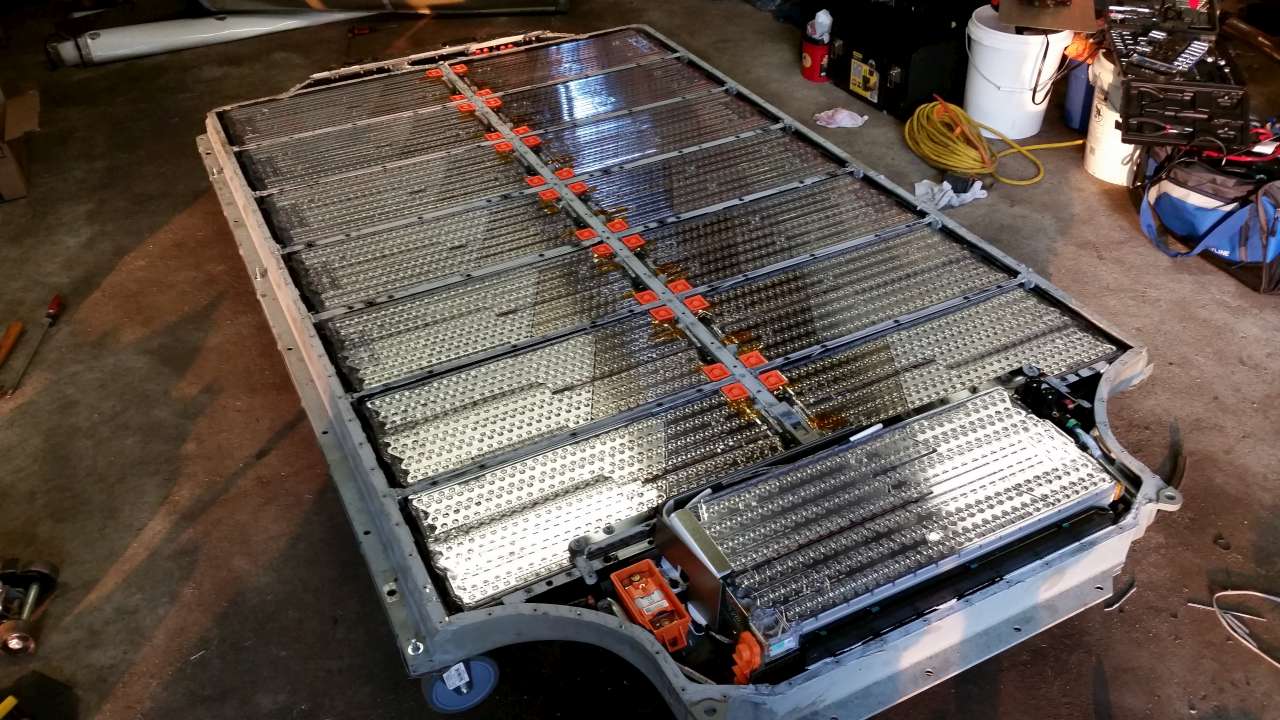
The Tesla Model S Battery Pack (uncovered)

https://staticseekingalpha3.a.ssl.fastly.net/uploads/2016/2/3860661_14564468182045_2.png
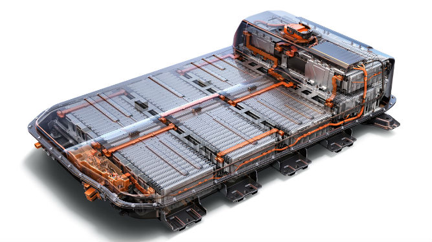
singular unit  Bolt Battery Pack
]

In 2014 Tesla announced the "Gigafactory," the answer to high battery
prices.

The Chevrolet Bolt demonstrates the advantages of prismatic cells. Fewer
cells, easier to cool and cheaper.

Tesla should consider also manufacturing prismatic cells in the Gigafactory
for the Model 3.

The Gigafactory

In their December 2014 10-Q report, (page 11) Tesla announced:

    We believe that the Tesla Gigafactory will allow us to achieve a major
reduction in the cost of our battery packs of greater than 30% on a per kWh
basis by the end of the first year of volume production of Gen III. The
total capital expenditures associated with the Tesla Gigafactory through
2020 are expected to be $4-5 billion, of which approximately 2 billion is
expected to come from Tesla.

True to form, Tesla had decided to vertically integrate further, by
manufacturing their own batteries. At that time battery pack prices were
approximately $300/kWh, so a 30% saving would reduce the costs to $210 a
kWh. The Model 3 will probably use a 50kWh battery, which in 2014 would cost
$15,000, and after the Gigafactory less than $10,500. This savings is
supposed to allow a Model 3 design to sell for $35,000, making it
competitive with the BMW 3-series.

While Tesla is building a Gigafactory to manufacture cylindrical cells by
the millions, all other EV manufacturers have decided to use prismatic
battery cells, supplied by LG or Samsung (OTC:SSNLF). The reasons were
revealed with the introduction of the Chevrolet (NYSE:GM) Bolt.

The prismatic cells offer a cheaper, lighter, solution to EV battery design
threatening the value of the Gigafatory and even the competitiveness of the
Model 3.

The Battery is KIng
The heart of any electric vehicle is its battery. It is the most expensive
(and heaviest) component of any EV, and it dictates what the range and
performance of the car will be.

Up to now no BEV, except the Tesla Models S & X, have had a range of over
200 miles. This is only possible because the battery packs on the S and X
are huge, cost around $22,000 and weigh 1,300 lbs.

The pack uses the same concept used for the Roadster in 2004. Thousands of
small cylindrical cells placed in an isolated liquid cooled (or heated)
environment.

Present Competition
The present EV competition, such as the Nissan (OTCPK:NSANY) Leaf and the
BMW i3 have ranges of less than 100 miles. Instead of using larger
batteries, many automakers add a small internal combustion engine to charge
the battery, increasing the range, but not the performance. These hybrid
cars, such as the Chevy Volt and the BMW i3REX, have received good reviews,
however they do not qualify as compliance cars, and are missing the benefits
of pure EVs performance.

The Chevrolet Bolt
The Chevy Bolt, a pure EV that GM developed in concert with LG is the first
non-Tesla EV with a claimed range of over 200 miles.

The Bolt will be priced at $38,000 ($30,500 after a $7,500 rebate).

How did Chevy/LG get the battery price down? The answer is Prismatic cells,
which are cheaper than cylindrical cell battery packs.

The first Li-ion batteries were cylindrical and used in toothbrushes and
laptops. As the demand for long battery life on cell phones and thin laptops
increased the "Prismatic" cell was developed.

Cell Types
Prismatic cells were originally designed for areas where cylindrical cells
are too wide, such as iPads, iPhones, and thin laptops. LG now has developed
Polymer Prismatic pouch cells especially for EVs. Prismatic batteries have
advantages over the cylindrical battery packs. They are lighter in weight
than the equivalent cylindrical cell battery packs. They can produce more
energy per cell; they can be cooled through a heat sink rather than liquid
cooling each cell. They also are cheaper than cylindrical cell battery
packs. The cylindrical cells battery packs require liquid cooling and a
single completely sealed enclosure.

The Bolt battery pack is 50kWh and requires only 280 pouch cells. The Model
S 70kWh Battery pack requires 6800 cells!

The Bolt cells can be distributed in different areas of the auto whereas the
Tesla pack is a singular unit

The Gigafactory
The purpose of the Gigafactory was to reduce battery costs by virtue of
quantity produced. It now appears that if Tesla continues to build the
cylindrical cell battery packs they will not have a price advantage with the
Model 3. They might consider manufacturing prismatics in the Gigafactory.
Panasonic is building a prismatic factory in China so they already have the
ability to make the change.

The Bolt is only the first EV to use the LG batteries, LG claims to be
sourcing these batteries to 16 companies making EVs or HEVs.

Conclusion
Tesla has been using the same battery pack design using cylindrical cells
since 2004. Cylindrical cells are now obsolete. The industry has developed
prismatic cells, which are less expensive to make, easier to cool, and
available to all auto companies. Tesla should consider designing the Model 3
battery pack using prismatic cells and producing them in the Gigafactory.


Disclosure: I/we have no positions in any stocks mentioned, and no plans to
initiate any positions within the next 72 hours. I wrote this article
myself, and it expresses my own opinions. I am not receiving compensation
for it (other than from Seeking Alpha). I have no business relationship with
any company whose stock is mentioned in this article. Editor's Note: This
article discusses one or more securities that do not trade on a major U.S.
exchange. Please be aware of the risks associated with these stocks.
[© 2016 Seeking Alpha]


For EVLN EV-newswire posts use:
http://evdl.org/evln/


{brucedp.150m.com}

--
View this message in context:
http://electric-vehicle-discussion-list.413529.n4.nabble.com/EVLN-Batteries-are-King-A-Gigafactory-Challenge-tp4680720.html
Sent from the Electric Vehicle Discussion List mailing list archive at
Nabble.com.
_______________________________________________
UNSUBSCRIBE: http://www.evdl.org/help/index.html#usub
http://lists.evdl.org/listinfo.cgi/ev-evdl.org
Read EVAngel's EV News at http://evdl.org/evln/
Please discuss EV drag racing at NEDRA (http://groups.yahoo.com/group/NEDRA)