https://www.teslarati.com/tesla-model-s-model-x-model-3-electric-pump-system-temperature-sensors-drive-unit-upgrade/
Tesla is designing an electric pump system that makes its drive units even
better
January 11, 2019  Simon Alvarez
[images
https://www.teslarati.com/wp-content/uploads/2019/01/tesla-patent-pump-1-604x542.jpg
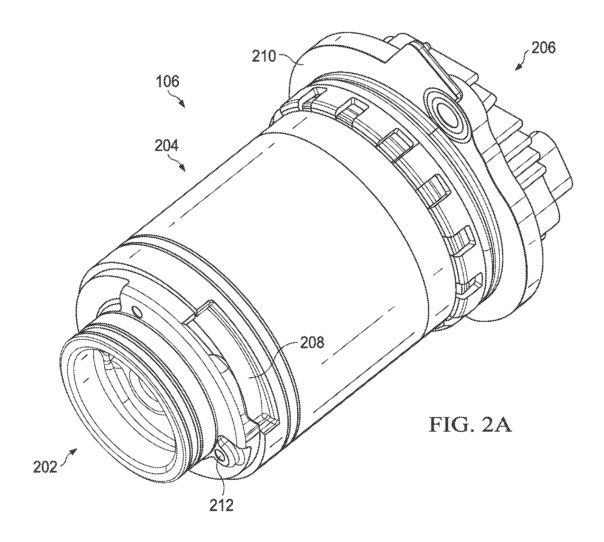
Illustrations from Tesla’s recently published patent application for an
electric pump system. (Photo: US Patent Office)

https://www.teslarati.com/wp-content/uploads/2019/01/tesla-patent-pump-2-494x699.jpg
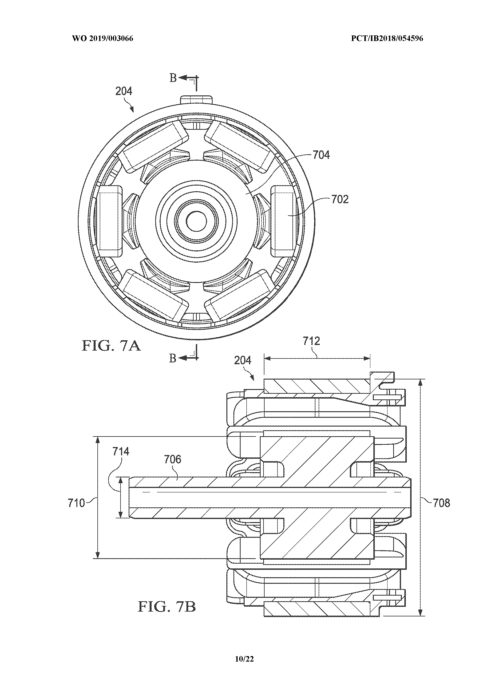
Illustrations from Tesla’s recently published patent application for an
electric pump system. (Photo: US Patent Office)
]

Amidst Tesla’s continued efforts to usher in an era of mobility optimized
for the convenience and safety of car owners, the electric car maker is
exploring new ways to improve its vehicles’ systems. Recently published
patent applications, for one, indicate that Tesla is working on better
damage monitoring features, as well as safer seats that are capable of
classifying a car’s occupants. Apart from these, Tesla is also looking into
improving its vehicles’ electric pump system, which could ultimately result
in better cooling and diagnostics.

The patent application [
https://patentscope.wipo.int/search/en/detail.jsf?docId=WO2019003066&recNum=1&docAn=IB2018054596&queryString=ALLNAMES:(tesla)&maxRec=2276
], published on January 3, 2019 and titled “Electric Pump System and
Method,” explores improvements that could be implemented on traditional pump
systems used in automobiles. As noted by Tesla, traditional oil pumps,
particularly those that are used for EV components such as the drive unit,
do not have the capability to monitor oil condition. As a result, oil that
is used to lubricate an electric car’s drive unit need to be changed on a
regular basis (albeit very infrequently).

In the discussion section of its patent application, Tesla pointed out that
traditional oil pumps are unable to accurately determine temperature, since
temperature sensors are usually located outside of a conventional pump
system. Apart from this, the electric car maker notes that conventional oil
pumps are also large and unwieldy due to attachment mechanisms comprised of
different parts. With these points for improvement in mind, Tesla has
pointed out that there is a need for an “improved oil pump — in particular
an electric pump system — designed to work in conjunction with an electric
motor.”

Tesla’s patent describes an electric pump system that “presents methods and
structures that help overcome the difficulties of operating a cooling and
lubrication system, in particular, managing the transfer of heat and
assessment of fluid temperature in electric pump systems.” The Silicon
Valley-based carmaker describes its electric pump system design as follows.

“There is provided an apparatus that includes an electronic control unit, a
mechanical pump, and a motor having a first side and a second side, the
motor including: a stator, a rotor including a hollow shaft, and a housing
around the stator and rotor, wherein the electronic control unit is
connected to the first side of the motor, wherein the mechanical pump is
connected to the second side of the motor, wherein the hollow shaft defines
a shaft inlet and a shaft outlet, wherein the mechanical pump defines a
first fluid passageway from a first pump inlet to the shaft inlet, wherein
the housing defines an internal motor cavity, wherein the shaft outlet is in
fluid communication with the internal motor cavity, wherein the mechanical
pump defines a second fluid passageway from a second pump inlet to a pump
outlet, and wherein the motor housing and mechanical pump define a third
fluid passageway from the internal motor cavity to the pump outlet via a
third pump inlet.”

“In some embodiments the apparatus according to the above-described aspect
of the present disclosure or any other aspects thereof, a number of optional
operations and features may be employed. One optional feature is the
electronic control unit further including a thermistor to measure a
temperature of a fluid exiting the shaft outlet. Another optional feature is
wherein the housing defines a bypass inlet in fluid communication with the
internal motor cavity. Another optional feature is at least a portion of the
second fluid passageway and the third fluid passageway is common. Another
optional feature is the mechanical pump is a gerotor. Another optional
feature is the electronic control unit includes a microcontroller
controlling the mechanical pump. Another optional feature is the electronic
control unit includes cooling ribs.”

With such a design, the fluid temperature inside the electric pump system
could be used to control and optimize the lubrication system of a vehicle,
thereby improving the efficiency of an electric drive unit. Depending on the
temperature of the oil in the system, the electric pump could react
accordingly, even warning the vehicle’s computers that something is wrong.
The readings from the electric pump system can be used to monitor the health
of a vehicle’s drive unit as well. Tesla explains this process in the
following discussion.

“The fluid temperature may be controlled to achieve certain lubrication
properties. For example, hotter oil has lower viscosity which reduces drag
and hydraulic power to pump the fluid, which can increase efficiency. If the
oil becomes too hot, however, it will not provide sufficient cooling. The
fluid temperature reading feature of the oil pump can monitor the general
health and performance of the fluid in the electric drive unit system. For
example, if the oil is too hot, the oil pump may alert the car computer that
something is wrong, for oil that is too hot can damage or/and reduce the
life of some components on the drive unit.”

“Stated another way, the temperature of fluid may be used to monitor the
health and performance of the drive unit. The ECU may capture other
information besides the temperature, such as pump speed, pump current
composition, oil pressure, or other information. The information captured by
the ECU may then be fed into a proprietary algorithm that monitors oil pump
and overall drive unit health. The algorithm may provide an indication of
service, such as when oil must be replaced or when the drive train needs to
be serviced.”

What is particularly notable is that these improvements could result in
enhancements to Tesla’s drive units, which are already among the best in the
industry. The Model 3’s drive unit, for one, has been lauded by veteran
teardown experts such as Sandy Munro as industry-leading. In a recent
appearance at Autoline TV, for one, Munro noted that Tesla’s drive units are
practically a class above its competitors.

Tesla’s constant efforts to improve its vehicles are highlighted by the
patent applications from the company that have been published over the past
months. Among these include an automatic tire inflation system that hints at
off-road capabilities for the company’s vehicles, a system that allows Tesla
to address panel gaps during vehicle assembly, a way to produce colored
solar roof tiles, and even a model that utilizes electric cars as a way to
improve vehicle positioning, to name a few.
[© teslarati.com]


+
https://www.theeastafrican.co.ke/news/ea/Kenyan-engineer-walks-away-from-top-Tesla-job/4552908-4928880-70acikz/index.html
Kenyan engineer walks away from top Tesla job
January 10 2019  Charles Mwangi, a senior engineer at US electric carmaker
Tesla, has resigned making him the latest senior staffer to exit the Elon
Musk-headed firm ... Engineer Charles Mwangi. He has resigned as senior
director of engineering at ... Tesla to join an undisclosed start-up ...
https://www.theeastafrican.co.ke/image/view/-/4928960/highRes/2220227/-/maxw/600/-/fyqtuiz/-/mwas.jpg


For EVLN EV-newswire posts use:
 http://evdl.org/archive/


{brucedp.neocities.org}

--
Sent from: http://electric-vehicle-discussion-list.413529.n4.nabble.com/
_______________________________________________
UNSUBSCRIBE: http://www.evdl.org/help/index.html#usub
http://lists.evdl.org/listinfo.cgi/ev-evdl.org
Please discuss EV drag racing at NEDRA (http://groups.yahoo.com/group/NEDRA)