[ref
http://electric-vehicle-discussion-list.413529.n4.nabble.com/EVLN-DIY-JdeMO-L3-DC-Charging-Added-to-the-Rav4-gen2-EV-gt-400mi-e-roadtrip-td4683084.html
]
http://insideevs.com/travelogue-a-400-mile-dc-road-trip-to-monterey-in-a-toyota-rav4-ev/
Travelogue: A 400 Mile DC Road Trip to Monterey In A Toyota RAV4 EV
20160721  Stephen Noctor

[images
http://insideevs.com/wp-content/uploads/2016/07/DC-plugs-750x213.jpg
DC Plugs

http://ventricular.org/ItsElectric/wp-content/uploads/2016/06/IMG_6506-768x576.jpg
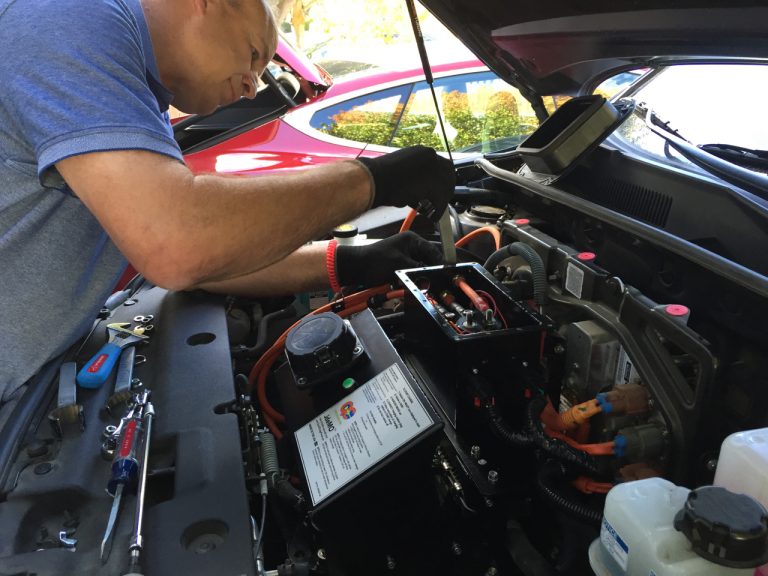
The 2012 Rav4 EV comes equipped with a ‘Level 2’ charging port that charges
the car on AC current at a maximum of 240 volts / 40 amps. That requires
roughly 5 or 6 hours to fully charge the battery from empty. Higher power DC
current can charge cars much faster. I bought a third party DC charging
port, called JdeMO, that was designed, manufactured and installed by Tony
Williams of Quick Charge Power. I can now charge at up to 380 volts and 125
amps. MUCH FASTER!

http://ventricular.org/ItsElectric/wp-content/uploads/2016/07/30minutes-768x627.jpg
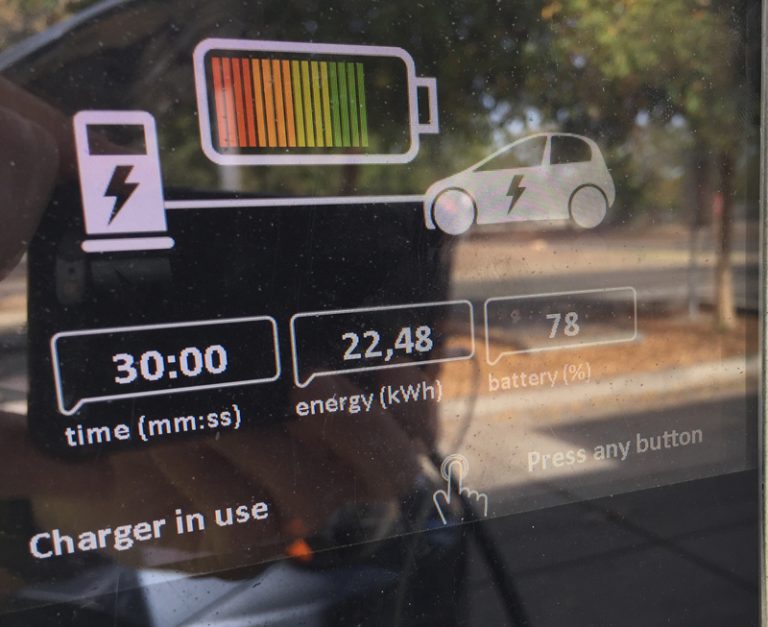
A 30 minute DC charge session sent over 22 kWh to my battery pack through
the JdeMO port

http://ventricular.org/ItsElectric/wp-content/uploads/2016/07/MontereyRoute.jpg
MontereyRoute

http://ventricular.org/ItsElectric/wp-content/uploads/2016/07/Start2-768x858.jpg
After driving 180 miles, with one 40 minute DC charge / lunch break, we
arrived in Monterey with about 12 kWh in the pack and the GOM estimating
over 40 miles of driving range

http://ventricular.org/ItsElectric/wp-content/uploads/2016/07/IMG_1589.jpg
We left Monterey with a full charge and the GOM guessing that we could drive
142 miles

http://ventricular.org/ItsElectric/wp-content/uploads/2016/07/IMG_1628-768x576.jpg
Dinner and electrons in San Rafael

http://ventricular.org/ItsElectric/wp-content/uploads/2016/07/Home.jpg
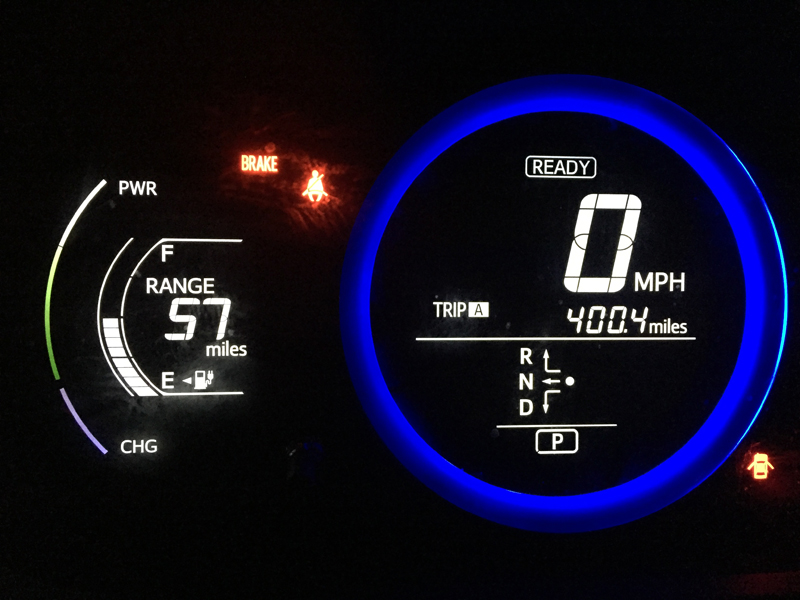
Home (guessometer shows 400mi)
]

[image]  The Road To Monterey
This past weekend we took our 2012 Rav4 EV, equipped with JdeMO, on a 400
mile road trip to Monterey.  The Rav4 EV has an EPA rated range of 113
miles, and Toyota sold this electric car without a ‘Level 3’ DC quick
charging port. Using the standard ‘Level 2’ charging port would require
about 5 hours to add 100 miles of range to the battery on a public charging
station. So even starting with a full battery, a 400 mile trip would require
about 15 hours of charging along the way. This seriously hamstrings the car,
keeps it tethered to the garage, and effectively makes it useless for long
trips….   unless you have a tremendous amount of patience.

In my opinion, an effective EV needs to be able to charge on both standard
‘Level 2’ and DC quick chargers. For the average person Level 2 charging
will take care of the bulk of our charging needs for commuting to work and
driving around town, while DC quick chargers will be very useful for longer
trips and weekend excursions. This post relates an example of how DC quick
charging makes traveling in an EV much easier.

Editor’s Note:  Steve also has a blog where you can learn more about his
adventures with the Toyota RAV4 EV (something of a rarity these days) –
here.

A Quick Word on Levels for those unfamiliar with charging an EV here’s a
quick primer:

‘Level 1‘ charging is when you plug into a 110 volt outlet that you’d
normally use for a lamp. Charging my Rav on a 110V outlet adds about 3 miles
of driving range per hour of charging, would take over 40 hours to fully
charge the battery, or 16 hours just to cover my daily 50 mile roundtrip
commute. Nice to have that option, but not surprisingly I don’t use Level 1
charging.

‘Level 2‘ charging uses 200 – 240 volts and up to 40 amps for the Rav4 EV. A
typical public charging station provides 208 volts and 30 amps, for about 6
to 7 kW of power. This yields about 20 miles of range per hour of charging,
and is perfectly fine for the vast majority of my driving needs: commuting
to work, running errands, etc. During a typical work week I charge every
other day for 4 or 5 hours on Level 2. Many people who drive EVs charge
their cars in the garage overnight while they sleep, so they wake up fully
charged and ready to go.

‘Level 3‘ charging, or DC quick charging, comes in various forms. For
example, the Nissan Leaf has a CHAdeMO port, the BMW i3 and Chevy Spark have
the J1772 Combo port, and Tesla cars have their own proprietary charging
port. See the corresponding charging plugs below.

DC charging stations for CHAdeMO and CCS currently provide a maximum of up
to 400 volts and 125 amps, for 50 kW of power. Tesla Superchargers can
provide up to 400 volts and 300+ amps for a max 135 kW of power. For a
Nissan Leaf with the 24 kWh battery, Level 3 charging can provide about 60
miles of driving range in 30 minutes.

DC Charging Added to the Rav4 EV
The lack of a Level 3 DC charging port on the Rav was a major oversight and
a serious limitation. Thankfully, Tony Williams of Quick Charge Power
devised a solution to address this shortcoming. Tony sells a CHAdeMO
charging port, called JdeMO, that allows Rav4 EV owners to charge their cars
on the network of CHAdeMO DC chargers. I purchased JdeMO for my Rav and Tony
installed it in September 2015. JdeMO changed everything for me.

The capacity of the battery pack in the RAV4 EV is 41.8 kWh, it’s a bit
larger than battery packs in other non-Tesla EVs. As a result the Rav4 EV
with JdeMO can hold ~45 kW charge rate for a full 30 minutes charge session.
On 125 amp CHAdeMO chargers, over 22 kWh will be sent to my battery pack in
30 minutes, yielding over 80 miles of range (depending on travel conditions
– your mileage may vary).

Travelogue: 400 Miles to Monterey and Back
The trip to Monterey for me is 180 to 200 miles each way, depending on the
route. I drove through Walnut Creek, Pleasanton and San Jose on the way
down, and on the way home drove along the coast through Santa Cruz and Half
Moon Bay to San Francisco, across the Golden Gate Bridge and back to the
Central Valley. And let me take a moment here to say that it’s just an
absolutely beautiful drive – I highly recommend this road trip for everyone.

There were over 30 CHAdeMO charging stations along the route each way, so I
had lots and lots of choices for charging spots. Please note that we’re just
talking about CHAdeMO charging stations here. If I had included Level 2
charging stations on the map below you’d barely see anything on the map but
the green icons that mark the location of Level 2 charging stations. My plan
was to stop once on the way down and eat lunch while charging, and to make
several short charging stops on the way home while taking in the sights
along Route 1.

My route as plotted on the Plugshare.com website. CHAdeMO charging stations
are indicated by the orange icons. There were over 30 charging stations each
way.
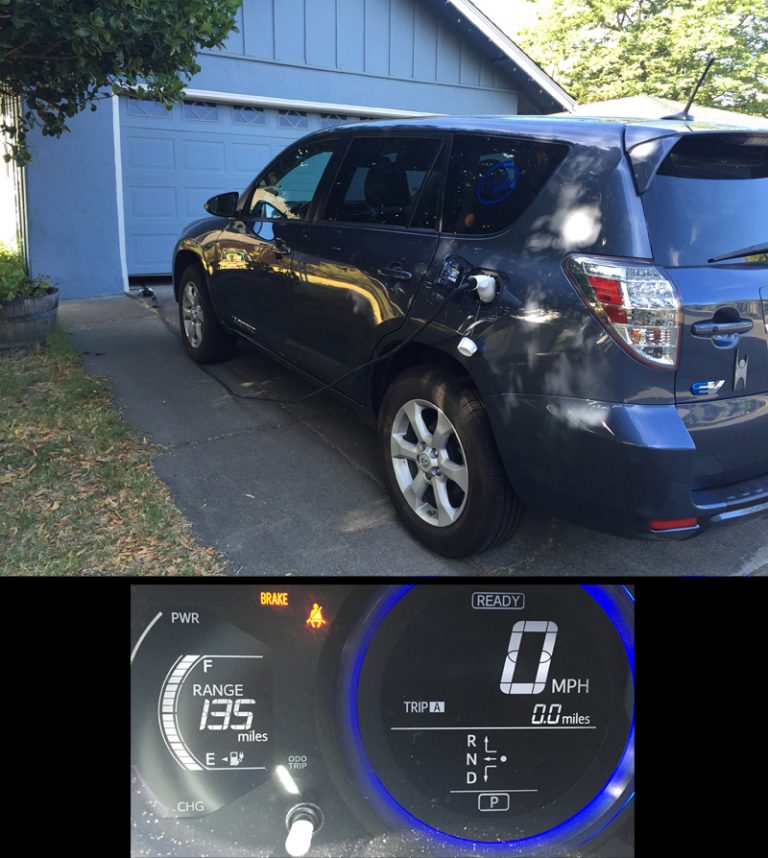
I charged at home before leaving, and started the trip with the battery pack
at about 90% state of charge (SOC), ~36 kWh in the pack, and the
Guess-O-Meter (GOM) estimating 135 miles of driving range. NOTE 1: For a
brief explanation on the GOM, scroll down to the bottom. NOTE 2: I have the
MyEV data logger that records SOC at the beginning and end of each trip, as
well as mileage and duration of each trip. All data in this post on SOC,
mileage and time spent driving were pulled from the data logger.

I topped off at home before starting the trip. My 'Guess-O-Meter' estimated
135 miles of driving range and I reset the trip odometer to '0'.
I charged to about 90% at home before starting the trip. My ‘Guess-O-Meter’
estimated 135 miles of driving range and I reset the trip odometer to ‘0’.

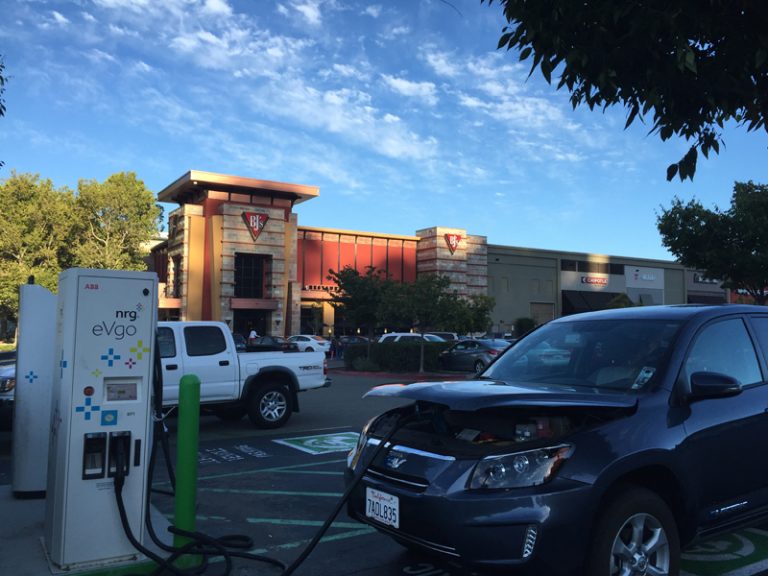
The first leg was uneventful. After driving 95 miles in 1h:45m my first stop
was at Lucky’s in Fremont. This is an EVgo charging station that has 4 dual
CHAdeMO/CCS chargers and one level 2 charger. From what I’ve read it’s one
of the busiest, non-Tesla charging stations in the US. The chargers are
located in a shopping mall complex that has a coffee shop, a grocery store,
restaurants and other places to eat or shop. We ate lunch while charging.
Nobody was waiting behind me so when my 30 minute charging session finished
I charged for an additional 10 minutes while getting the kids back into the
car and ready for the next leg. The 40 minute charge sent over 27 kWh to the
battery pack, bringing the SOC up from 28% to 90% with the GOM estimating
134 miles of range (see NOTE on the GOM at bottom).

Charging at Lucky's DCQC in Fremont with Leaf and Spark EVs. A 40 minute
quick charge took my battery pack from 28% to 90% SOC.
After driving 95 miles I charged at Lucky’s DCQC in Fremont with a Leaf and
Spark EV. 40 minutes of charging brought my battery pack from 28% to 90%
SOC.
On the second leg we hit lots of traffic in San Jose, so the 85 mile trip to
Monterey took 2h:15m. We arrived in sunny Monterey with about 12 kWh
remaining in the pack and the GOM estimating 45 miles of driving range.

We checked in to our weekend digs, and could smell the fresh ocean breeze so
first thing first we went for a walk on the beach. But enthusiasm for taking
a swim was dampened by the 52 degree water, so instead we took in the local
culture.

[image]  Nice cool July day to take a walk ... on the beach and took in the
local culture.
The next two days we visited the major spots in Monterey: the Mission, the
Aquarium, the Presidio, and also spent time wandering around the streets
finding good restaurants, cafes, little museums, and a museum housing a
permanent collection of over 500 works by Salvadore Dali.

[image]  We visited the Mission, the Presidio, museums, and what trip to
Monterey would be complete without a trip to the aquarium?
After 2 days our short stay in Monterey had come to an end and it was time
to head home. I was ready to get back on the road – it’d been a long time
since I drove along Route 1 between Monterey and San Francisco and I looked
forward to driving that route in an EV.

My plan was to leave Monterey with a full charge, and stop in Santa Cruz,
Pacifica, and San Rafael for a short charge if needed, and stop anywhere
else in between that looked interesting. The planned route was about 200
miles. There is a CHAdeMO charger in Monterey, and I originally planned to
use that to start the trip home. But to my surprise I found a public parking
garage near the hotel with two Level 2 charging spots that were actually
available. So I charged there twice for a total of 6 hours over Saturday and
Sunday. This added maybe 30 kWh to the battery and we left Monterey with a
full charge. Note: instead of charging for those 6 hours I could have
charged at the Monterey CHAdeMO and had way more than enough to get to Santa
Cruz.

There was lots of traffic on the highway from Monterey to Santa Cruz, so
driving 40+ miles took almost 90 minutes. By this time my son needed a
bathroom break and I wanted some fresh coffee. So I stopped at the Whole
Foods in Santa Cruz and charged for 20 minutes, bringing the SOC back up to
94%, while we took a quick break before getting back on the road. For the
next hour the road was clear and driving along Route 1 was amazing like
always. We stopped at the Pigeon Point lighthouse, Half Moon Bay, and a few
other spots along the way to buy fresh produce and take in the view.

[image]  Driving an electric car on Route 1? Priceless.
Our next stop was Pacifica, which was 70 miles from the charger in Santa
Cruz. The CHAdeMO charging spot in Pacifica at the Linda Mar shopping center
might be my least favorite of those I’ve used, so we didn’t linger. But that
15 minute stop gave us another 11 kWh of energy and brought the battery pack
state of charge from 50% up to 75%.

We drove through San Francisco, stopped by the old apartment in the Inner
Sunset, and continued across the Golden Gate Bridge as sunset approached.

[image]  Crossing the Golden Gate Bridge heading north out of San Francisco.
We pulled in to San Rafeal at dinner time, stopped at a plaza with many
shops, stores and restaurants and charged for 25 minutes while having a
quick dinner. We arrived in San Rafael with the battery pack at 50% SOC and
after the 25 minute DC quick charge added 18 kWh, we left with a 90% SOC and
the GOM estimating over 130 miles of driving range.

From San Rafael it was a short 70 mile drive home. We left with the sun at
our back and returned to the Central Valley.

[image]  The last leg on our way home as we venture back into the Central
Valley.
We arrived home after a great weekend visiting some incredibly beautiful
places. We made this 400 mile California road trip in the 2012 Rav4 EV, a
pure battery electric car outfitted with a DC charging port – which it
should have had from the beginning (I’m looking at you Toyota).

I’ll conclude this post as I started: An effective EV must be able to charge
on both standard ‘Level 2’ and DC quick chargers to be a truly useful car.
I’ll probably get push back on that, so yes, Level 2 charging serves the
vast majority of our driving needs. But DC quick charging turns a commuter
car into a car the average person can use for many more occasions. Gasoline
powered cars can’t make long distance trips, or any trips for that matter,
without relying on the existing network of gas stations. DC quick charging
stations are the gas station of the future.

ADDITIONAL NOTES:

1. Driving with Children

My children are 5 and 7 years old. I bring this up because of some
complaints I’ve read about EVs in the past, that their ‘paltry’ range makes
them impractical, and that traveling with children in an EV is impossible.
I’m pretty sure this particular complaint was lodged by somebody who does
not have children. It’s not traveling in an EV that’s hard for children,
it’s traveling in any car. True to form my 5 year old son asked if we were
there yet 5 minutes after we started the trip….   we hadn’t even left my
town! But to finish this point: stopping every 90 minutes or so is actually
good for young kids, it’s definitely good for my son who needs a chance to
run around, burn off some energy, stretch his legs, take a potty break, and
get a snack or bite to eat while we quick charge the car. This refreshes him
and makes the trip much easier for me. As the kids get older they’ll
probably be ready for longer stretches of driving. By then the 200 mile EVs
should be on the market, and hopefully I’ll be driving one of them!

2. Charging and Driving Summary:

400 miles; 11h: 15m driving; 1h: 40m DC charging.

The 11 hours 15 minutes driving over 400 miles works out to an average speed
of 35 MPH, but a good bit of that was sitting in traffic in San Jose on the
way down, and then Santa Cruz, and Half Moon Bay on the way back, as well as
scenic driving on Route 1, and some slow driving around Monterey and San
Francisco.

A total of 1 hour 40 minutes charging at 4 CHAdeMO chargers; average charge
stop 25 minutes.

Started the trip with about 36 kWh in the pack and picked up 67 kWh from DC
quick chargers. Charged for 6 hours on a level 2 charger near my hotel in
Monterey where I think I picked up another 30 kWh. Got home with 16 kWh
remaining in the pack.

So: 36+67+30 = 133 kWh -16 kWh still in the pack when we got home = 117 kWh
to drive 400 miles.

That makes for about 3.4 miles per kWh. Not bad for the 4000 pound Rav and a
family of 4.

Compared to gas: One gallon of gas has the equivalent of 33.5 kWh of energy,
therefore I used the equivalent of 3.5 gallons of gas to drive 400 miles =
114 MPGe. Electric motors are much more efficient than gasoline engines.

3. Another Way of Summarizing the Trip:

95 miles driving – 40 min stop for DC charge and lunch in Fremont; (+27.3
kWh)
85 miles driving – Arrived in Monterey
6 miles driving around Monterey; 6 hours Level 2 in Monterey public garage
(+30 kWh)
41 miles driving – 20 min stop for DC charge and break in Santa Cruz; (+10
kWh)
70 miles driving – 15 min stop for DC charge and break in Pacifica; (+11
kWh)
33 miles driving – 25 min stop for DC charge and dinner in San Rafael;
(+18.2 kWh).
70 miles driving – home.
NOTE: I did not optimize charging time. I could have driven longer on some
legs. For example I could have skipped the charging station in Pacifica, but
choose charging breaks based on my kids needs.

4. Costs

I charged at EVgo stations on this trip. EVgo has a plan that costs $14.95
per month, plus 10 cents per minute charging. The 100 minutes of charging
cost me $10. If I didn’t use CHAdeMO again that month (which I will of
course, but lets say I don’t) that would be $24.95 dollars to EVgo, plus
$6.50 to PGE for the 36 kWh at home before starting the trip, equals $31.45
to drive 400 miles, or about 7.8 cents per mile. If I had used the CHAdeMO
station in Monterey instead of the free public garage that would have been
another $3 for a grand total of 34.45 = 8.6 cents per mile, BUT if I had
used a CHAdeMO in Davis instead of my garage to start the trip we’d be back
down to $31.00 = 7.7 cents per mile. Long story short: DC charging is not
too expensive. NOTE: the more I use EVgo chargers each month, the lower the
price per mile.

5. RAV4 EVs with JdeMO

There are now over 100 of us driving 2012-2014 Rav4 EVs with the JdeMO port.
Some, like Tony, are driving thousands of miles each month powered by JdeMO.
My experiences are in no way unique, but I just happen to like sharing!

6. A Word on the GOM

The GOM in the RAV4 EV bases its estimate on your past couple of days
driving. I live in the Central Valley where it’s warm and flat, ideal
driving conditions for any car in terms of efficiency. That’s why my GOM
typically gives estimates that are higher than the EPA rating of 113 miles.
I averaged 3.4 miles per kWh on this trip. The EPA rating of 113 miles total
driving range is based on averaging 2.7 miles per kWh, which is probably
just about right for the average person driving in average conditions around
the year.
[© 2016 Inside EVs]


For EVLN EV-newswire posts use:
http://evdl.org/evln/


{brucedp.150m.com}

--
View this message in context:
http://electric-vehicle-discussion-list.413529.n4.nabble.com/EVLN-DIY-JdeMO-L3-DC-Charging-Added-to-a-Rav4-gen2-EV-400mi-e-roadtrip-tp4683087.html
Sent from the Electric Vehicle Discussion List mailing list archive at
Nabble.com.
_______________________________________________
UNSUBSCRIBE: http://www.evdl.org/help/index.html#usub
http://lists.evdl.org/listinfo.cgi/ev-evdl.org
Read EVAngel's EV News at http://evdl.org/evln/
Please discuss EV drag racing at NEDRA (http://groups.yahoo.com/group/NEDRA)