Hank Mills
December 29th, 2013 at 2:34 PM
Dear Andrea,

The information you are sharing is facinating. While we wait for the full
reports, it gives us something to think upon.
1 – If the mouse over stimulates the cat so it runs around in circles
continually, not going back to sleep, does the cat always explode?

2 – Have you ever witnessed the cat running around in circles for extended
periods of time, not needing any extra stimulation, but remaining stable?

3 – Other than heat from the mouse, is anything else stimulating the cat
during the drive or self sustain periods? It may not work for the hot cat,
but I wish there was some low power method of keeping the cat stimulated.
For example, like the 100 watts of radio frequencies that kept the one
megawatt plant in self sustain mode.

4 – By how many degrees on average does the surface of the cat vary from
the end of the drive stage to the end of the self sustained stage?

Andrea Rossi
December 29th, 2013 at 6:10 PM
Hank Mills:
1- no
2- confidential
3- no
4- the temperature of the Cat raises when the Mouse is turned off, lowers
when the Mouse is turned on
Warm Regards,
A.R.

Hank Mills
December 27th, 2013 at 7:34 PM
Dear Andrea,

What happens if you do not apply power again once you put the reactor in to
self sustained mode? Do the reactions try to run away or will they fade
over time? With at least some of your previous reactors, if you did not
apply power every so often the reactors would run away. However, in one
test the data showed when the input power was cut off the reactions
gradually faded over time.

Andrea Rossi
December 27th, 2013 at 7:56 PM
Hank Mills:
If we give too much energy to the reactor the temperature raises above the
controllability limits and the reactor explodes. We must maintain the drive
below this limit, and it is what we are learning to do, trying to reach a
controllability level at the highest temperature possible, because the COP
raises exponentially with the operation temperature. The apparatus is made
by two well separated components, the activator ( “mouse”) and the energy
catalyzar ( “Cat”). Now we have a mouse with a COP above 1 and a Cat with a
COP with zero energy consumption. If the Mouse excites the cat too much,
the cat gets wild and explodes. We must not risk to reach this level. We
have seen explode hunderds of reactors now, this way.
Warm Regards,
A.R.

Joseph Fine
May 12th, 2013 at 8:53 PM
Dear Andrea Rossi,

The initiator/Mouse is at low (or zero power) when switched off. It/(the
Mouse) consumes 1 kW only 35% of the time (and produces essentially 1.02 kW
of heat during this time). Instead of using a (Joe)COP of 2.86(P2/P1) =
286, assume the actual COP is only 100-125. This is admittedly much higher
than the presumed COP of 10-12, but lets continue along this path.

If the “ETA”, or thermal-to-electric conversion efficiency at 350-400 C, is
between 30% and 40% (40% is on the high side), and COP is between 100-125,
(let alone 200-250) then each 100 kW Hot Cat would be able to drive from
.3*100 to .4*125 or 30 – 50 other Hot-Cats. So, each 1 KW input to a
first-stage Mouse can produce not 100 KW-th but, by generating 30+ kW-Elec,
may be able to drive 30 other second-stage 100 kW Hot Cat devices.

Even if it is possible to produce 3 MW-thermal with one (1st stage) 1 kW
Mouse, it may be much simpler to have 30 1-kW Mice to drive 30 separate 100
kW devices.

Without getting too exuberant, three stages of multiplication by a factor
of 20, instead of 30, is already 20^3 = 8000. That is, even if a single 1st
stage kW Mouse can only drive 20-100 kW ‘Cats’, three such stages, using a
single 1 kW input (gas or electric), ultimately might produce 8000*100 kW
or 800 MW of heat.

And if you can produce 800 MW of heat, or even much less, why do you need a
1 kW input? (Other than for start-ups.)

0) Is that the basic concept of what you are trying to accomplish?

1) When a 100 kW HotCat or Tiger-Cat is not in the self-sustained mode
(SSM), what mode or state is it in? In other words, how much thermal power
is produced during the 35% of time the 100 kW Cat is not in SSM? Does it
have an electrical input to bring it back under control? Or do you simply
remove its input Hydrogen (Idrogen) supply?

Multi-stage regards,

Joseph Fine

PS I apologize for this comment, as I may be engaging in irrational
exuberance.

Andrea Rossi
May 12th, 2013 at 5:03 PM
Dear Dr Joseph Fine:
1- The Activator provides heat to the Customer when it is turned ON, while
it also activates the E-Cat. When it is turned off his production is very
low.
2- yes
3- I would say: since the Activator pays for itself, being its COP ~1.02 ,
the E-Cat has a COP difficult to evaluate: we say 100-200, but, as a matter
of fact, at the denominator there is zero.
4- this depends on the model of the apparatus. In the basic Hot Cat it is
about 1 kW
5- no
Warm Regards,
A.R.

Steven N. Karels
May 12th, 2013 at 5:47 AM
Dear Andrea Rossi,

Many thanks for the continued information and clarifications of the
Activator and Reactor. A very interesting implementation. Also, thanks to
Pekka Janhunen for the closed form solution to average COP. A few
additional questions:

a. In the Activator – Reactor system, essentially you have a Reactor
without electrical heaters but it receives its control heat from the
Activator. So at thermal steady-state operation, the Reactor is in SSM 65%
of the time and in the other 35%, heat is being applied by the Activator?
Is this essentially correct?

b. Conceptually, if you were to construct a 1MW industrial device using 10
of the 100 kW Tiger units, would you be limited in output power control to
10%?

c. If the 100 kW Reactor just begins its SSM operation mode and the user
demand significantly decreases, can the 100 kW unit be immediately
throttled back or must one wait for the cessation of SSM before an output
reduction occurs?

d. In the 100kW design, is the Activator an internal part of the Reactor
body or an external unit (for example, it wraps around the Reactor)?

e. What are the dimensions of the 100 kW unit? – I would like to run a heat
transfer analysis, please.

Andrea Rossi
May 12th, 2013 at 8:04 AM
Dear Steven N. Karels:
a- when the activator is on the E-Cat is off, when the E-Cat is on the
Activator is off. When the Activator is turned off the temperature rises,
becauce the E-Cat is activated, when the Activator is turned on the
temperature lowers, because the E-Cat goes off. If we consider
100 hours of operation, for about 35 hours the Activator is on and the
E-Cat is off, while for about 65 hours the E-Cat is on and the Activator is
off. We reached a good stability for this reason: the Activator gives to
the E-Cat enough energy to give good performance, but not enough to escape
from control, like a Mouse which make a Cat nervous, but not too much;
then, the Activator stops, the CaT goes on, until he returns to sleep; at
this point the Mouse- activator is turned on, but the temperature goes down
because the E-Cat is off; at this point the Cat becomes again nervous, and
immediately the Mouse- activator is turned off, while again the temperature
raises, and so on. The invention of this cycle, regulated by a complex
software, allows to reach high temperatures in good stability. The
important thing is that also the Activator has a charge, so that it reaches
a COP more than 1, paying for itself: for this reason the energy that the
Activator consumed is paid for by itself and does not affect the COP of the
E-Cat. You know how I invented this system? I was in North Carolina and
observed in a garden of the hotel a sleeping cat: a squirrel passed fast
close to the cat, and the cat made some move to reach the squirrell, but
the squirrel disappeared and the cat returned to sleep…that’t learning from
Nature!
b- No
c- So far we are making R&D on the 100 kW Tigers, I can’t answer
d- see 3
e- see 3
Warm Regards,
A.R.

Italo R.
May 11th, 2013 at 11:16 PM
Dear Dr. Rossi, may I ask something about the last stunning development?
1 – How long in minutes is the cycle: mouse (35% of total) + cat (65% of
total)?
2 – During the first 35% when the cat is off (no ssm also), the heat
produced by the whole apparatus is tending to zero?

Andrea Rossi
May 12th, 2013 at 12:39 AM
Dear Italo R.:
1- the cycle depends, is regulated by a central control system
2- no, when the Activator is on ( and the Cat off) all the energy consumed
by the Activator is given as a heat production with a COP slightly superior
to 1 ( 1.02): for this reason the energy consumed from the Activator has
not to be accouinted for as a consume of the E-Cat: all the energy consumed
by the activator is recovered and used by the Customer.
Warm Regards,
A.R.

Steven N. Karels
March 24th, 2013 at 7:02 PM
Dear Andrea Rossi,

Regarding the independent third-party testing, you stated “But my Cats are
good, I’m sure they are working well”

Questions:

1. How many eCats did you provide to the third party testers?
2. Were they nominal 10kW output power reactors?
3. What flavor of eCats (Thermal, Hot or Gas-fired) were provided?

Andrea Rossi
March 25th, 2013 at 8:03 AM
Dear Steven N. Karels,
The new technology of the Hot Cats has revolutioned the system we had used
before. Please wait the publication, afterward we will talk of this issue.
Basically, we have no more a reactor or a cluster of reactors, but each
reactor is coupled with an activator: let’s make this model: the activator
is the Mouse, which makes the Cat run. The Mouse has his own COP which is
more than 1, the Cat is a surprise.
Warm Regards,
A.R.

Dan C.
June 5th, 2015 at 7:57 PM
Dear Andrea

In a previous post, I said I hope they don’t send the 8-ball instead of a
Crystal Ball.

In case your not aware of it, I thought I would clarify. It is a novelty
fortune telling device of childhood days. The correct name is Magic 8-Ball.
It is merely a play on the Crystal Ball. Both just as reliable.
Here is a wiki link.
http://en.wikipedia.org/wiki/Magic_8-Ball

This link provides the 20 answers in a standard 8-Ball. There were many
variations of the 8-ball, some not suitable for children.

Note: A pinball was much more entertaining.

Regards,
Dan C.

Andrea Rossi
June 5th, 2015 at 9:20 PM
Dan C.:
The concert model is proper: wherein many instruments can make a harmony
that is not just the sum of single sounds: resonances can generate virtual
entities whose energy is higher than the sum of the energy of the singles.
The Mouse has a driving license, of course!
Next time you bake a cake I send him to make the pick up.
Speaking seriously: thank you for your insight.
Warm Regards
A.R.

BroKeeper
April 30th, 2015 at 7:38 PM
Dear Andrea Rossi,
You responded to Curiosone: “I can say that the 1 MW E-Cat ( ” She” ) is
stable and in ssm mode.” This seems to imply the 1MW plant, as a single
unit, ran in self-sustain mode, not just an individual reactor.

If this is the case then one of two scenarios could be explained. Either
you have now been able to synchronize control of all the reactors as one,
or the SSM of each reactor is long enough for all 100 reactors to be more
often than not in SSM at once. In this case a major breakthrough has been
achieved with a significant ratio of output to input far beyond COP 20.
Could you enlighten us to which case this may be if not another?

With much respect, BroKeeper

Andrea Rossi
May 1st, 2015 at 7:48 AM
BroKeeper:
The ssm is enhanced by the fact that with the control system directing
multiple reactors we can obtain a synergy between them using some of the
reactors to drive others, where the driving ones ( mouse operation) are
less than the cat ones. This way the ssm phases are substantially more that
the driving ones. This synergy, obviously, is possible only with big plants
( so far).
I cannot give the numbers, as correctly Steven N Karels anticipated and,
also, after consulting Orsobubu, I have to add that what we have now is not
the final result, things can worsen substantially in time and the final
results could be either positive or negative ( this last phrase could be
substituted by F-Something).
Warm Regards,
A.R.
Steven N. Karels
December 29th, 2013 at 6:34 AM
Dear Andrea Rossi,

You had previously posted about small (1kW), regular (10kW) and large
(100kW) eCat modules being considered. Can you discuss anything on these
variants?

1. Have the small and large eCat modules been built?
2. Have they been tested?
3. Do they have the same performance characteristics as the 10kW nominal
units?

As an engineer, I recognize the necessity of testing equipment beyond their
specified operating limits. I am surprised that temperatures beyond the
melting point of Nickel were observed.

How do you reconcile the 2,000C temperature observed with the melting point
limitation of Nickel (1,455C)?

There have been some LENR theories that suggest Tungsten could be used in
place of Nickel. Tungsten has a higher melting point (3,422C). Perhaps a
Tungsten-based eCat module could be implementated for special applications
(e.g., space travel)?

Andrea Rossi
December 29th, 2013 at 8:20 AM
Steven N Karels:
1- yes
2- yes
3- moreless yes
About the temperature: during the destructive tests the temperature raises
for some second well above the melting point of Ni. This is why the “Mouse”
cannot excite over a certain limit the E-Cat to maintain well stabilized
operation.
Warm Regards,
A.R.


 IMHO, the common denominator across these LENR systems is the production
of nanoparticles. In the Rossi type system, there is a supercritical gas
environment that is produced by the release of hydrogen gas. Nanoparticles
are produced when the temperature and the gas pressure is reduced.

What is a supercritical gas

https://www.youtube.com/watch?v=yBRdBrnIlTQ

Nanoparticles are produced when the gas leaves the supercritical state.
This is caused when the temperature and/or pressure (T/P) is reduced. It is
like a bottle of soda...bubbles of gas are formed when the top of the soda
is removed.

Here is an example of how nanoparticles are created when supercritical
gas/liquid changes due to T/P decrease.

https://www.youtube.com/watch?v=6zurHSq4CB4

By the way, this is how water nanoparticles are produced in cavitation when
water nanoparticles are formed. These water nanoparticles produce SPPs in
cavitation.

As the gas cools and the pressure drops, nanoparticles are produced. The
wire heater produces heat and the temperature is increased. The reactor
must continually produce nanoparticles through the cycling of pressure and
temperature to replace nanoparticle losses due to the destructive nature of
the reaction and limited lifetimes of SPPs.

Rossi said:
"when the activator is on the E-Cat is off, when the E-Cat is on the
Activator is off. When the Activator is turned off the temperature rises,
because the E-Cat is activated, when the Activator is turned on the
temperature lowers, because the E-Cat goes off. "


On Wed, Dec 2, 2015 at 4:04 PM, Bob Cook <[email protected]> wrote:

> Dave--
>
> The number 16 may come from the Artists rendition of a reactor.  I could
> find no specific Rossi statement regarding the picture included in the
> E-Cat World item identified by Axil as the basis for his comment.  Axil’s
> interpretations of what he reads and sees in various items can make use of
> a lot of imagination.  The device pictured in the item referenced is way to
> small to be a practical 250Kw reactor in my estimation.
>
> Bob Cook
>
> *From:* David Roberson <[email protected]>
> *Sent:* Wednesday, December 02, 2015 11:46 AM
> *To:* [email protected]
> *Subject:* Re: [Vo]:LENR reactors need magnetic confinement
>
> I have also seen the reference to the 16 reactors.  The question is
> whether or not 1 is the driver with 15 following devices.  Where did you
> see anything about a special type of driver device among the other 15?  Did
> Rossi state this or is it entirely your assumption?
>
> Dave
>
> -----Original Message-----
> From: Axil Axil <[email protected]>
> To: vortex-l <[email protected]>
> Sent: Wed, Dec 2, 2015 2:12 pm
> Subject: Re: [Vo]:LENR reactors need magnetic confinement
>
> Roland  Bob
> <http://www.e-catworld.com/2015/12/01/rossi-on-the-e-cats-modular-future-e-cat-x-units-can-combine-to-make-power-plants-of-any-size/#comment-2387524176>
>  • 17 hours ago
> <http://www.e-catworld.com/2015/12/01/rossi-on-the-e-cats-modular-future-e-cat-x-units-can-combine-to-make-power-plants-of-any-size/#comment-2388142662>
> Hi Bob,
> Each 250kVA module is composed of 16 reactors; we were all confused about
> this till Rossi revealed the structure a few days ago after the photos and
> mockups were published.
>
> From:
> Rossi on the E-Cat’s Modular Future: E-Cat X Units Can Combine to Make
> Power Plants of Any Size
>
> On Wed, Dec 2, 2015 at 1:42 PM, David Roberson <[email protected]> wrote:
>
>> Axil, where did you see a description of the tiger?  I do not recall any
>> reference to the use of one module to drive the other 15.
>>
>> Dave
>>
>>
>>
>> -----Original Message-----
>> From: Axil Axil <[email protected]>
>> To: vortex-l <[email protected]>
>> Sent: Tue, Dec 1, 2015 10:40 pm
>> Subject: Re: [Vo]:LENR reactors need magnetic confinement
>>
>> It has be recently revealed that each 250kVA E-Cat tiger reactor module
>> is composed of 16 reactors. Only one of those reactors  is a powered
>> activator(mouse). The other 15 are drones driven by the activator. The
>> activator produces a reaction catalyst that drives the other drones. I say
>> that the reaction catalyst is the magnetic Exotic Neutral Particle(ENP)
>> that becomes mobile as its energy content level reaches a self sustaining
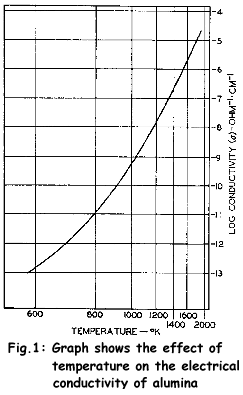
>> threshold. At low temperatures the alumina tub reactor shell that all these
>> reactors are comprised of confines the ENP. But as all these reactors heat
>> up, the alumina shell becomes electrically conductive. At high
>> temperatures, the alumina becomes magnetically transparent and this allows
>> the ENP to leave the activator an enter the drone where the ENP catalyzes
>> the LENR reaction.
>>
>> http://www.thevalvepage.com/valvetek/heater/fig1.gif
>>
>> Electrical conductivity Vs, temperature.
>>
>> On Tue, Dec 1, 2015 at 7:02 PM, Axil Axil <[email protected]> wrote:
>>
>>> The so called Erzion phenomenon was discovered in a series of
>>> electrolytic experiments marked by unexplained changes in a pool of cooling
>>> water outside of the catalytic cell. After 40 minutes of electrolytic cell
>>> operation, water on the tungsten anode side of the cooling vessel started
>>> loosing its transparency.
>>> Water on the stainless steel cathode of the pool of cooling water
>>> remained transparent, at the same 40 C temperature. A sample of bubbly
>>> water, removed from the anode side, was tested for induced gamma
>>> radioactivity. No such radioactivity was found in it; the sample became
>>> transparent after 24 hours. Attempts to reproduce the long-term loss of
>>> cooling water transparency with other electrolytes, and under different
>>> electrical discharge conditions, were not successful. But the effect was
>>> highly reproducible when experimenting with the tungsten-anode electrolytic
>>> cell and the 7 M KF electrolyte containing 50% of heavy water.
>>> [image: Thumbnail]
>>> <http://pages.csam.montclair.edu/~kowalski/cf/341fig1.jpg>
>>> That cooling water on the outside of the electrolytic cell's glass
>>> reactor shell at the right side (see Figure 1) is close to the anode while
>>> cooling water on the left side is close to the cathode. The disappearance
>>> of bubbles, after the electrolysis, was very slow (half-life of about 10
>>> hrs). Attempts to explain the phenomenon in terms of cavitation, and other
>>> ultrasonic effects, were not successful. The only satisfactory explanation
>>> was possible within the framework of the erzion model. Authors believe that
>>> bubbles are produced through the action of neutral Erzions.
>>> The Erzons phenomenon behavior is consistent with the magnetic based
>>> Exotic Neutral Particle(ENP). To begin with, the glass container is
>>> transparent to the magnetically based ENPs both optically and magnetically.
>>> The LENR reaction that keeps the ENPs viable produce the vapor that forms
>>> the water bubbles. The ENPs become energetically self sufficient in the
>>> water of the cooling pool where the ENPs remain viable for hours.
>>> If the Erzons phenomenon is produced by magnetically based ENPs, an iron
>>> plate placed just on the outside of the glass wall adjacent to the anode
>>> would prevent the ENPs from exiting the glass electrolytic cell. With the
>>> ENPs blocked from travel, bubble production would be eliminated.
>>>
>>> On Tue, Dec 1, 2015 at 5:37 PM, Axil Axil <[email protected]> wrote:
>>>
>>>> In my opinion, the fundamental nature of the Rossi effect is based on
>>>> magnetism. The catalytic particle that produces the reaction is magnetic in
>>>> nature. This particle is produced by heat pumping and EMF stimulation. The
>>>> nature of this Exotic Neutral Particle (ENP)is reflected by the behaviour
>>>> of the E-Cat itself and reflect how the E-Cat operates.
>>>>
>>>> The ENP can exist at low energy pumping where the energy coming into
>>>> the particle is equal to the energy leaving the particle. This is similar
>>>> to the way Rossi keeps his reactor under control. Too much external energy
>>>> pumping will result in the E-Cat going critical.
>>>>
>>>> The same process of over pumping happens with the ENP. Overpumping
>>>> brings it to the stage where it becomes self-sufficient requiring no
>>>> additional EMF input. The energized ENP can get EMF from the environment
>>>> around it not requiring external heat or EMF simulation to be applied.
>>>>
>>>> The same is true for the E-Cat. When the E-Cat is subcritical, it
>>>> requires heat and EMF stimulation to be applied. But when it is "over
>>>> stimulated" it begins to meltdown since it has become independent from
>>>> externally applied stimulation.
>>>>
>>>> The ENP can live as long as it can catalyze energy production from the
>>>> material around it. The ENP can live for days on its own as it brings in
>>>> energy from the environment to sustain its internal LENR reaction
>>>> processes.
>>>>
>>>> Magnetic confinement increases efficiency of the reaction. Such
>>>> confinement saves the externally applied energy that produced the ENP from
>>>> being wasted.
>>>>
>>>> The ENP can leave the reactor if the material that makes up the reactor
>>>> enclosure is transparent to the optical and magnetic nature of the ENP.
>>>> This might be why electrolytic cells have difficulty in sustaining powerful
>>>> LENR reactions. In this case, the ENPs escape the glass beaker reactor
>>>> enclosure and all the input energy that was pumped into the ENP is wasted
>>>> to the environment. outside the electrolytic cell.
>>>>
>>>> If the cell is made of material that can contain the ENP both optically
>>>> and magnetically, the reactor will be efficent. Alumina is
>>>> antiferromagnetic and will confine magnetic particles thy to escape the
>>>> reactor shell. Another method of ENP confinement that Rossi might use is a
>>>> solenoidal confinement coil that keeps the ENPs away from the reactor walls
>>>> in the center axis of the reactor.
>>>>
>>>>
>>>>
>>>
>>
>>
>
>