The types listed by Wang Jing-Yuan are mentioned on

https://petsc.org/main/docs/manualpages/TS/TSIRK.html
So maybe they do exist, but I haven't tried them.  TSARKIMEX are a
better-tested alternative?

Ed


On Tue, Oct 5, 2021 at 2:44 AM <[email protected]> wrote:

> Send petsc-dev mailing list submissions to
>         [email protected]
>
> To subscribe or unsubscribe via the World Wide Web, visit
>         https://lists.mcs.anl.gov/mailman/listinfo/petsc-dev
> or, via email, send a message with subject or body 'help' to
>         [email protected]
>
> You can reach the person managing the list at
>         [email protected]
>
> When replying, please edit your Subject line so it is more specific
> than "Re: Contents of petsc-dev digest..."
>
>
> Today's Topics:
>
>    1.  Question about the fully implicit Runge-Kutta methods (TS)
>       (Wang Jingyuan)
>    2. Re:  Question about the fully implicit Runge-Kutta methods
>       (TS) (Matthew Knepley)
>
>
> ----------------------------------------------------------------------
>
> Message: 1
> Date: Tue, 5 Oct 2021 03:56:48 +0000
> From: Wang Jingyuan <[email protected]>
> To: "[email protected]" <[email protected]>
> Subject: [petsc-dev] Question about the fully implicit Runge-Kutta
>         methods (TS)
> Message-ID: <[email protected]>
> Content-Type: text/plain; charset="utf-8"
>
> Dear Sir or Madam,
>
> I am a student of the University of Macau, I am trying to learn PETSc and
> I have two questions about the TSIRK.
>
> 1.PETSc 3.16.0 adds ?irk" for the TSType and it offers many options like
> TSIRK1BEE, TSIRK2C, TSIRK2D, TSIRK2E, TSIRK3, TSIRKL2,  I am not sure how
> to use them and if only Gaussian points can be used (Radau or Labatto may
> not offered).
>
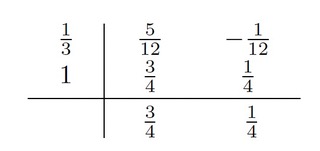
> 2.Maybe there is a similar option to implement the fully implicit
> Runge-Kutta methods in PETSc 3.15 or other previous versions? For example,
> if I want to solve a time dependent problem with a butcher table like
> below, do I need to input it by myself?
> [cid:CF3DAFB6-6115-45C2-BEE4-0ADCA66709BB]
>
> Thank you very much for your help.
>
> Best regards,
> Wang Jing-Yuan
> -------------- next part --------------
> An HTML attachment was scrubbed...
> URL: <
> http://lists.mcs.anl.gov/pipermail/petsc-dev/attachments/20211005/ce44e7c5/attachment-0001.html
> >
> -------------- next part --------------
> A non-text attachment was scrubbed...
> Name: PastedGraphic-1.jpeg
> Type: image/jpeg
> Size: 6702 bytes
> Desc: PastedGraphic-1.jpeg
> URL: <
> http://lists.mcs.anl.gov/pipermail/petsc-dev/attachments/20211005/ce44e7c5/attachment-0001.jpeg
> >
>
> ------------------------------
>
> Message: 2
> Date: Tue, 5 Oct 2021 06:43:02 -0400
> From: Matthew Knepley <[email protected]>
> To: Wang Jingyuan <[email protected]>
> Cc: "[email protected]" <[email protected]>
> Subject: Re: [petsc-dev] Question about the fully implicit Runge-Kutta
>         methods (TS)
> Message-ID:
>         <
> camyg4gkkpmj1ma5dmssycjhsj_5pkisz0u78wbjqbxth_v+...@mail.gmail.com>
> Content-Type: text/plain; charset="utf-8"
>
> On Tue, Oct 5, 2021 at 12:42 AM Wang Jingyuan <[email protected]>
> wrote:
>
> > Dear Sir or Madam,
> >
> > I am a student of the University of Macau, I am trying to learn PETSc and
> > I have two questions about the TSIRK.
> >
> > 1.PETSc 3.16.0 adds ?irk" for the TSType and it offers many options like
> TSIRK1BEE,
> > TSIRK2C, TSIRK2D, TSIRK2E, TSIRK3, TSIRKL2,
> >
>
> The types you mention above do not exist. For instance, the first one
> "TSIRK1BEE" is actually
> https://petsc.org/main/docs/manualpages/TS/TSARKIMEX1BEE.html
>
>
> >  I am not sure how to use them and if only Gaussian points can be used
> > (Radau or Labatto may not offered).
> >
>
> There is currently only one IRK type, which is the Gauss method.
>
>
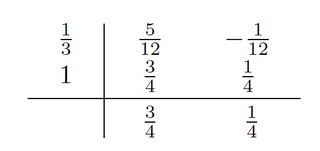
> > 2.Maybe there is a similar option to implement the fully implicit
> > Runge-Kutta methods in PETSc 3.15 or other previous versions? For
> example,
> > if I want to solve a time dependent problem with a butcher table like
> > below, do I need to input it by myself?
> >
> > Thank you very much for your help.
> >
>
> I do not understand your question. IRK is only present is 3.16
>
>   Thanks,
>
>       Matt
>
>
> > Best regards,
> > Wang Jing-Yuan
> >
>
>
> --
> What most experimenters take for granted before they begin their
> experiments is infinitely more interesting than any results to which their
> experiments lead.
> -- Norbert Wiener
>
> https://www.cse.buffalo.edu/~knepley/ <
> http://www.cse.buffalo.edu/~knepley/>
> -------------- next part --------------
> An HTML attachment was scrubbed...
> URL: <
> http://lists.mcs.anl.gov/pipermail/petsc-dev/attachments/20211005/3b41e7c8/attachment.html
> >
> -------------- next part --------------
> A non-text attachment was scrubbed...
> Name: PastedGraphic-1.jpeg
> Type: image/jpeg
> Size: 6702 bytes
> Desc: not available
> URL: <
> http://lists.mcs.anl.gov/pipermail/petsc-dev/attachments/20211005/3b41e7c8/attachment.jpeg
> >
>
> ------------------------------
>
> Subject: Digest Footer
>
> _______________________________________________
> petsc-dev mailing list
> [email protected]
> https://lists.mcs.anl.gov/mailman/listinfo/petsc-dev
>
>
> ------------------------------
>
> End of petsc-dev Digest, Vol 154, Issue 7
> *****************************************
>


--
Ed Bueler
Dept of Mathematics and Statistics
University of Alaska Fairbanks
Fairbanks, AK 99775-6660
306C Chapman