OPERATION EKLAVYA IN ACTION AT PREMIER INSTITUTES
<https://kafila.online/2020/05/08/operation-eklavya-in-action-at-premier-institutes/>
India is neglecting caste-based discrimination in higher educational
institutions at its own peril.
Subhash Gatade <https://www.newsclick.in/author/Subhash%20Gatade>
07 May 2020 (
https://www.newsclick.in/Operation-Eklavya-in-Action-at-Premier-Institutes)
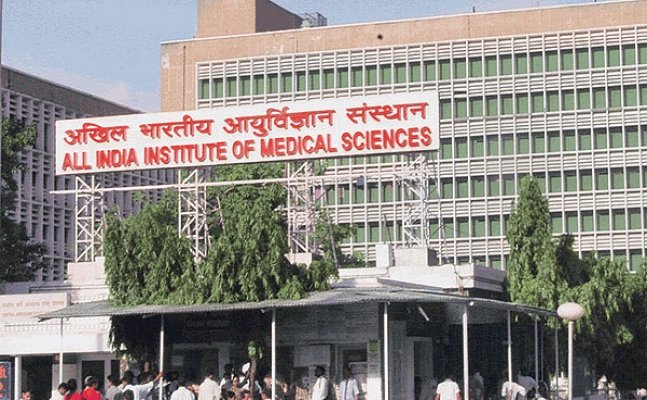
[image: AIIMS Caste Discrimination]
<https://www.newsclick.in/sites/default/files/2020-05/AIIMS%20Caste%20Discrimination.jpg>

It was exactly 13 years back that the Thorat Committee, constituted in
September 2006 to enquire into allegations of differential treatment of
Scheduled Caste and Scheduled Tribe students at the premier medical
institute, AIIMS—was released.

The first of its kind in independent India, this three-member committee led
by then chairman of the University Grants Commission, Sukhdeo Thorat, had
looked deeply into the many shades of discrimination
<https://thedeathofmeritinindia.wordpress.com/2011/05/17/prof-thorat-committee-report-on-caste-discrimination-in-aiims-new-delhi-2007/>
faced
by students of non-elite castes in the institute.

What it discovered after talking to students and faculty was, to say the
least, shocking. Some 72% of SC/ST students mentioned facing some
discrimination during the teaching sessions. Second, caste-based
discrimination was prevalent in the hostels, for instance around 88%
students reported experiencing of social isolation in various forms. The
committee’s report also outlined the discrimination faced by SC/ST
professors.

This context frames the alleged suicide attempt of a female doctor a
fortnight ago in the same institute. The doctor, who worked at the Dental
Research Centre of AIIMS, was allegedly facing sexual harassment and caste
discrimination. This is another reminder that there has not been a
qualitative change in the institute in the long years since the Thorat
Committee report.

The report had recommended joint committees of students, residents and
faculty to examine the social atmosphere; developing mechanisms to regain
social harmony; formation of an “equal opportunity office” to deal with all
issues of non-elite caste students; encouraging students of all identities
to participate in cultural and sporting activities; creating a roster
system for selecting senior residents and faculty. It had also asked that
the Ministry of Health should closely monitor
<https://thedeathofmeritinindia.wordpress.com/2011/05/17/prof-thorat-committee-report-on-caste-discrimination-in-aiims-new-delhi-2007/>
how
reservation is implemented at AIIMS.

The recent attempted suicide is disturbing, for the doctor had repeatedly
written to the authorities, including the Resident Doctor's Association, to
examine the issues she was raising. The Association had written to the
concerned authorities, including the health ministry, to take necessary
action, which was never done.

Question is: was the administration’s inaction a result of caste blindness
or deliberate neglect of a marginalised student? Definitely, the
callousness of AIIMS’ administration is no exception. On 22 May 2019, Payal
Tadvi, a promising doctor who belonged to the Bhil-Muslim community, ended
her life in a teaching hospital in Mumbai due to ill-treatment by her
seniors. The 26-year-old would have become the first doctor from her
community, were she still alive today.

Payal had also complained to the management of her hospital about
continuous harassment by her elite-caste colleagues, who were her seniors,
Hema Ahuja, Bhakti Mehra and Anikta Khandelwal. She had alleged not being
allowed to perform surgeries. She had confided in her parents and to her
husband Dr Salman Tadvi about this and other harassment
<https://www.sabrangindia.in/article/opinion-was-dr-payal-tadvi-victim-hate-crime,%20https://www.indiatoday.in/india/story/payal-tadvi-suicide-chargesheet-shows-accused-doctor-denied-her-mandatory-medical-leave-1574199-2019-07-27>
.

After Payal had died, Thorat said that the premier institutions are filled
with bitterness about marginalised students. “Nearly 25-30 students in the
top educational institutes have died in the last decade or so, but the
subsequent governments have failed to take any concrete policy decision to
end caste discrimination...,” he told
<https://www.newindianexpress.com/cities/delhi/2019/may/31/there-is-bitterness-towards-quota-students-thorat-1983949.html>
the
New Indian Express.

The logic of purity and pollution, which is the basis of caste and its
exclusions, manifested itself in IIT Madras as well, where separate
entrances to the dining hall were delineated for vegetarians and
non-vegetarians in 2018. The Ambedkar Periyar Study Circle, a student group
within the institute, had brought this issue to national attention. The
segregation was withdrawn after tremendous public uproar. “Caste
masquerades as something else in ‘modern’ society. In IIT Madras campus, it
manifests itself as separate entrance, utensils, dining area and wash area
in the mess for vegetarian and non-vegetarian students...,” the students of
the APSC said.

In her essay, “An anatomy of the caste culture at IIT-Madras”, Ajantha
Subramanian, a professor of Social Anthropology at Harvard University,
investigates caste and the notion of “meritocracy”. She notes
<http://www.openthemagazine.com/article/open-essay/an-anatomy-of-the-caste-culture-at-iit-madras>,
“Caste and casteism have shaped IIT Madras for a very long time, generally
to the benefit of upper castes”. Until 2008, when a legal sanction was
given to reservation of seats in educational institutes for members of the
other backward classes or OBCs, the general category made up 77.5% of
student admissions. This, as Subramanian points out, indicates that mostly
members of elite castes populated premier institutes. She wrote: “Not only
students, the composition of the faculty at IIT-Madras is also
overwhelmingly upper caste,” she notes, with 464 professors drawn from the
general category, 59 OBCs, 11 SCs, and only two STs.

Rohith Vemula’s case was no different. Deeply-entrenched caste prejudices
in India’s society and academic institutions, he said, reduced the value of
a to his immediate identity and nearest possibility. “To a vote. To a
number. To a thing. Never was a man treated as a mind,” his unforgettable
and deeply poignant suicide note of January 2016
<https://thewire.in/caste/rohith-vemula-letter-a-powerful-indictment-of-social-prejudices>
 said.

This promising student of Hyderabad Central University, who yearned to
become a science writer and was part of the Ambedkar Students Association,
was unjustly suspended by the University in August 2015 after an alleged
altercation with Hindutvadis students.

Rohith’s death led to a national uproar and created a pan-Indian student
uprising whose focus was on justice for a young scholar’s “institutional
murder”. There were demands for a Rohith Act to protect students from
marginalised communities in higher educational institutions, much on the
lines of the Nirbhaya Act. It was supposed to be an instrument to fight
caste oppression and ensure punishment and dismissal of those who
discriminate on grounds of identity.

What remains unanswered till date is how many students who could have been
role models for their communities and the entire country will have to
sacrifice their lives before we rise from our deep slumber. Should not
society do a soul-searching for its complicity in these denials,
humiliations and deaths. The poet Meena Kandasamy had written
<https://kafila.online/2016/01/29/condemning-caste-discrimination-in-higher-education-centres-that-led-to-rohiths-untimely-death-students-of-delhi-school-of-economics-delhi-university/>
after
Rohith’s death that the suicide of a Dalit student is not just an
“individual exit strategy” but “...a shaming of society that has failed him
or her.”

Yet time does not seem to be reducing caste discrimination and oppression,
rather it is increasingly being normalised. The arms of the state; the
legislature, executive and even judiciary, seem to be wanting on this score.

Caste asymmetries have seen a quantum jump with the ascent of Hindutva
supremacist formations. With its ascent to power at the Centre and most
states in 2014, the BJP has been “...systematically conniving
<https://kafila.online/2018/05/28/statement-on-atrocities-on-dalits-new-socialist-initiative/>
to
dilute existing provisions of affirmative action and legal protection to
Dalits.”

The BJP government has diluted legal provisions that are meant to include
more Dalits in university appointments, and it did not show alacrity in
restoring the Atrocities Act to its original form when it had been watered
down by a court order.... Instead, the UGC passed orders that reservations
will be based on departments rather than for a university or college as a
whole. Following this change in the rules, the advertisement for 52 faculty
posts at the Indira Gandhi National Tribal University in Madhya Pradesh, to
cite just one of many such instances, had only advertised one reserved
post.

The dilution of affirmative action programmes manifests itself in some
ingenious ways, which end up reducing the representation of members of
marginalised sections in educational institutions. For instance, at the
Jawaharlal Nehru University, where a unique reservation system is in place,
aspirants from backward districts, and students from weaker sections of
society, are included in the rank and file of the institution. However, of
late, there has been a qualitative change in the composition of the
university. It has been reported
<https://www.forwardpress.in/2016/02/bahujan-discourse-puts-jnu-in-the-crosshairs/>
that
according to the Annual Report for 2013-14, out of the total 7,677 students
at JNU, 3,648 (or around half) were Dalit-bahujan (1,058 SCs, 632 STs +
1,948 OBCs). If other deprived social groups, minorities and women are
included, the elite-caste and upper class are a numeric minority at JNU, as
pointed out by Abhay Kumar, in his 2016 essay
<https://www.academia.edu/14508566/Assertion_of_Dalit_Bahujan_Discourse_in_JNU>,
Assertion of Dalitbahujan Discourse in JNU.

But the recent suicide attempt and other changes ever since the university
decided to revisit its unique reservation system, this last bastion of
representative social composition is also under threat.

--
You received this message because you are subscribed to the Google Groups
"humanrights movement" group.
To unsubscribe from this group and stop receiving emails from it, send an email
to [email protected].
To view this discussion on the web visit
https://groups.google.com/d/msgid/humanrights-movement/CAJGPqca6vjnmPfZ_yEBWHvzmBeJX32x2mXUKpeqh6pSxnxXb0w%40mail.gmail.com.