https://insideevs.com/news/393022/batteries-electric-heavy-duty-commercial-applications/
Batteries Aren't Just For Passenger Electric Cars Anymore
Jan 15, 2020  David Lardner
[images
https://cdn.motor1.com/images/mgl/K9gvN/s3/dannar-6.jpg
 dannar

https://cdn.motor1.com/images/custom/heavy%20duty%20ev%201.JPG
 e-bulldoser

https://cdn.motor1.com/images/custom/heavy%20duty%20ev%202.JPG
 e-bus
]

The concept and technology is present and exciting. Now, we just need
adoption to set in.

There are very few parallels between the EV market and the blossoming
electric heavy-duty equipment market. But one that stands out is adoption.
Just like the automotive market, electric ZEV heavy-duty equipment faces
some big hurdles before it can go mainstream.

After ten years of availability of EVs for the consumer car market, we’re
starting to see some automotive manufacturers achieving impressive take
rates. We’re also seeing consumer acceptance that’s demonstrated by a
surprisingly high number of consumers who say that their next purchase will
be an EV.

For instance, BMW has sold over 500,000 electrified vehicles, which is
pushing numbers to 5% of their volume, and Jaguar’s I-Pace is garnering 12%
of Jaguar sales worldwide. Volvo is reporting that nearly 7% of its auto
sales in 2019 were electrified models.

ZEV off-road heavy-duty equipment

Off-road electric heavy-duty equipment is just getting its start. The
challenges of selling this type of equipment are an uphill battle because
the user base is a diesel-centric crowd and many can’t imagine a world
without diesel. It’s what they’ve always used and it’s what they know. But
as getting diesel delivered to job sites gets harder, alternatives are going
to have be investigated. Beyond that, some states and local regulations are
going to make using diesel increasingly difficult.

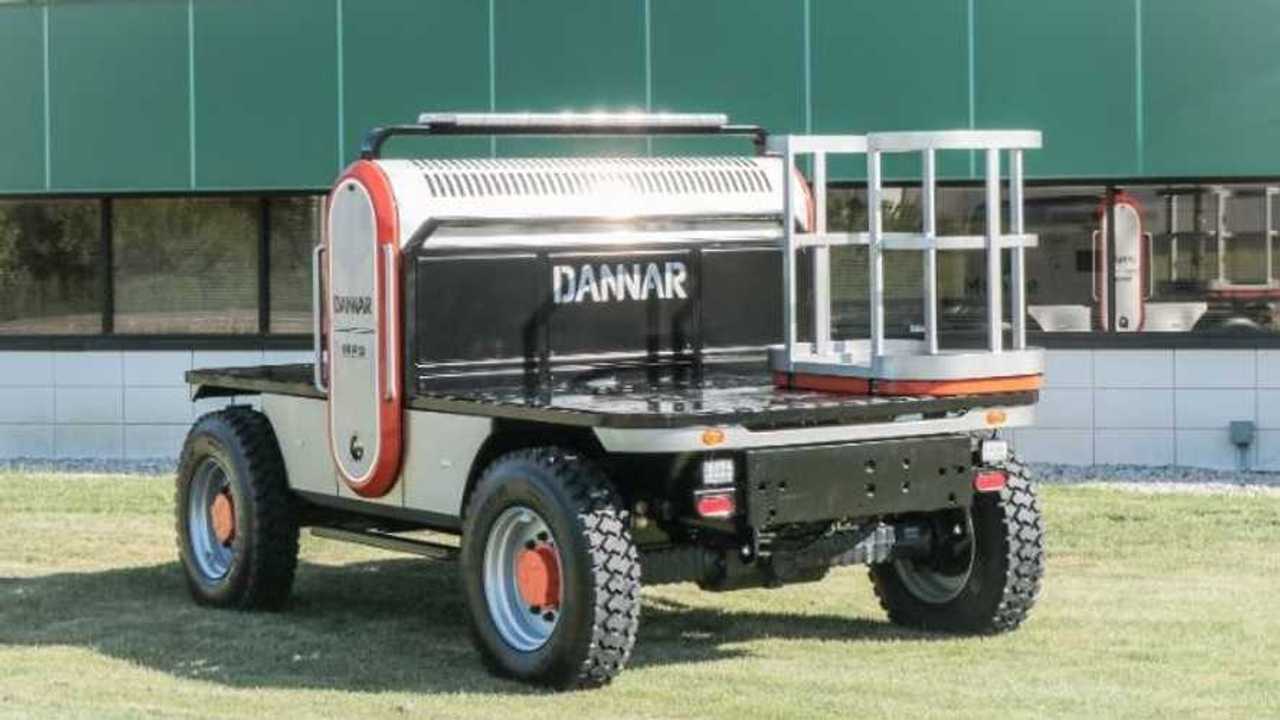
I recently reported on Dannar and its electric heavy-duty modular platform.
Its product can be easily modified to do any number of jobs simply by
attaching parts readily available on the market. It’s a fascinating piece of
machinery and there’s no doubt that we’ll be seeing these, along with
products from Cat, John Deere etc., showing up on worksites in the coming
years. But the question remains, how will adoption of this equipment take
place?

For Zero-Emission states, mandates will do a lot to get electric off-road
heavy-duty equipment into use. In the San Francisco Bay area, for instance,
there’s a push to be “Diesel-free by 33.” Right now, there aren’t any state
mandates for ZEV off-road equipment but, along with incentive programs for
ZEV light and heavy-duty equipment, recently added ZEV heavy-duty off-road
incentives will help spur adoption.

For states that haven’t adopted California’s regulations, adoption will come
about as diesel prices rise and costs drop on battery-powered equipment.
Combining operational savings with significantly higher uptime due to
requiring far less service, heavy-duty equipment operators such as
municipalities and construction companies will make the switch purely for
economic reasons.

What barriers still exist and when will the scales tip? To find out, I spent
a little time with the folks from Dannar during a demonstration at a
Caltrans training facility north of Sacramento. Caltrans employees from
nearby districts came in to see and hear what Dannar had to say about the
future of ZEV heavy-duty equipment.

When asked, many Caltrans employees acknowledged that electric is the
future. What’s interesting is how different generations view this change.
For instance, those with ten or so years until retirement tend to look at
this as something that they’ll see a little of, but likely something with
which they won’t have much interaction. And, if they do, it won’t be for
long.

The younger set sees electrified equipment as something that they will have
to use. And, their attitudes, despite living in a diesel world, are
surprisingly open.

One reason that there’s a difference in opinion based on age is that younger
employees are more likely to have friends who already drive electric cars.
They may even own one themselves and they’ve seen how successful EVs are
first-hand. The older folks tend not to have much experience with
lithium-ion devices beyond hand tools and cellphones. And that tends to
color perceptions.

There were some surprises that didn’t involve age. Mudslides and rockslides,
along with slip outs (undermining of roads) are situations loaded with risk.
When responding to these incidents with traditional diesel machinery, beyond
the equipment operator, there need to be at least three other people
watching for additional falling debris or road collapse. The Dannar 4.00,
with its military-grade encrypted remote control, can be remotely operated
at a distance of up to a mile. That substantially reduces risk and reduces
the manpower required when responding to these incidents.

Another area where remote control can substantially reduce risk is the
cleanup of homeless camps. These camps are frequently littered with
biohazards such as human feces, needles from drug use, and other potential
risks to the operator of the equipment used to clean them up. Beyond these
examples, there are bound to be other situations where remote control of
equipment will reduce risk. So as situations with risk are identified, the
use of ZEV remote-controlled equipment will be justified.

Using on-road heavy-duty ZEVs, public policy and environmental justice

Electric on-road heavy-duty transportation is a segment that has established
a foothold in the form of electric and hybrid-electric buses. With a number
of manufacturers already producing electric buses, we’re beginning to see a
rise in usage. But new electric buses are still very expensive and that
slows adoption.

BAE Systems has an interesting way to help cities electrify fleets by taking
an incremental approach to electrification by incorporating diesel-electric
hybrid systems to reduce diesel usage and air pollution. The twist here is
that their systems use GPS to determine what’s powering the bus.

San Francisco, for instance, has established Green Zones. These areas are
determined by ground-level pollution levels measured by the EPA and
household income from the US Census. It should come as no surprise that
lower-income areas frequently suffer from much higher than average air
pollution levels.

As buses equipped with BAE’s systems, known as an Integrated Vehicle
Propulsion System, approach a Green Zone, the diesel engine shuts down so
the bus can use energy stored in the battery to drive through the defined
area. Once the bus exits the area, the diesel engine starts back and,
through normal driving, replenishes the hybrid battery for the next Green
Zone.

Is this a perfect solution? No, but it’s a cost-effective way to promote a
public policy of environmental justice through the use of technology that
favors areas suffering from air quality problems. It’s also a cost-effective
way to move towards zero-emission public transportation.

San Francisco is far ahead of many municipalities in this regard. But with a
state-wide mandate for zero emissions by 2040 for transit buses, this system
allows the city to make incremental moves. And with buses, a lifespan of
about 15 years means that a bus with this unique hybrid system going into
service today will likely be replaced with a full-electric zero-emission bus
in 2035. Andy by then, the cost of acquisition will be much lower.

Where are we now with ZEV heavy-duty equipment?

Clearly, the automotive market has a substantial lead when it comes to
adoption. Within the next couple of years there are a number of automotive
manufacturers that are predicting 20-50% of their sales will be comprised of
electrified vehicles. And it’s clear that there are several who are on
target for those goals. With heavy-duty equipment, we’re a little further
behind.

On-road heavy-duty equipment leads because of mandates like “Diesel free by
33” and California’s 2040 ZEV mandate for transit buses. Municipalities have
to start moving in the ZEV direction. Options like BAE Systems offers allows
them to start making incremental steps in that direction. And, as CARB
starts looking at off-road heavy-duty equipment, that means that both
manufacturers, construction companies, and municipalities have to be ready
to make the move to the kind of ZEV platforms offered by Dannar.
[© insideevs.com]


+
https://www.rnz.co.nz/news/national/407212/new-zealand-is-one-of-the-best-countries-to-own-an-electric-vehicle-in-professor-says
New Zealand is one of the best countries to own an electric vehicle in,
professor says
13 January 2020  Electric cars are up to four times better for the
environment when being driven in New Zealand than in Australia ... "In New
Zealand, 80-85 percent of electricity is renewable, and therefore the
emissions per kilometre or per passenger kilometre are a lot lower with an
electric vehicle than they would be for an ice ...
https://www.rnz.co.nz/assets/news_crops/94412/eight_col_andrew-roberts-2JvEjF0tf50-unsplash.jpg?1578281759


For EVLN EV-newswire posts use:
 http://www.evdl.org/archive/


{brucedp.neocities.org}

--
Sent from: http://electric-vehicle-discussion-list.413529.n4.nabble.com/
_______________________________________________
UNSUBSCRIBE: http://www.evdl.org/help/index.html#usub
ARCHIVE: http://www.evdl.org/archive/index.html
INFO: http://lists.evdl.org/listinfo.cgi/ev-evdl.org
Please discuss EV drag racing at NEDRA (http://groups.yahoo.com/group/NEDRA)